

 GET A QUOTE
Drilling and Tapping SPM Machines for Precision Component Manufacturing
22 September, 2026

Powering Industries with Precision Engineering

22 September, 2026
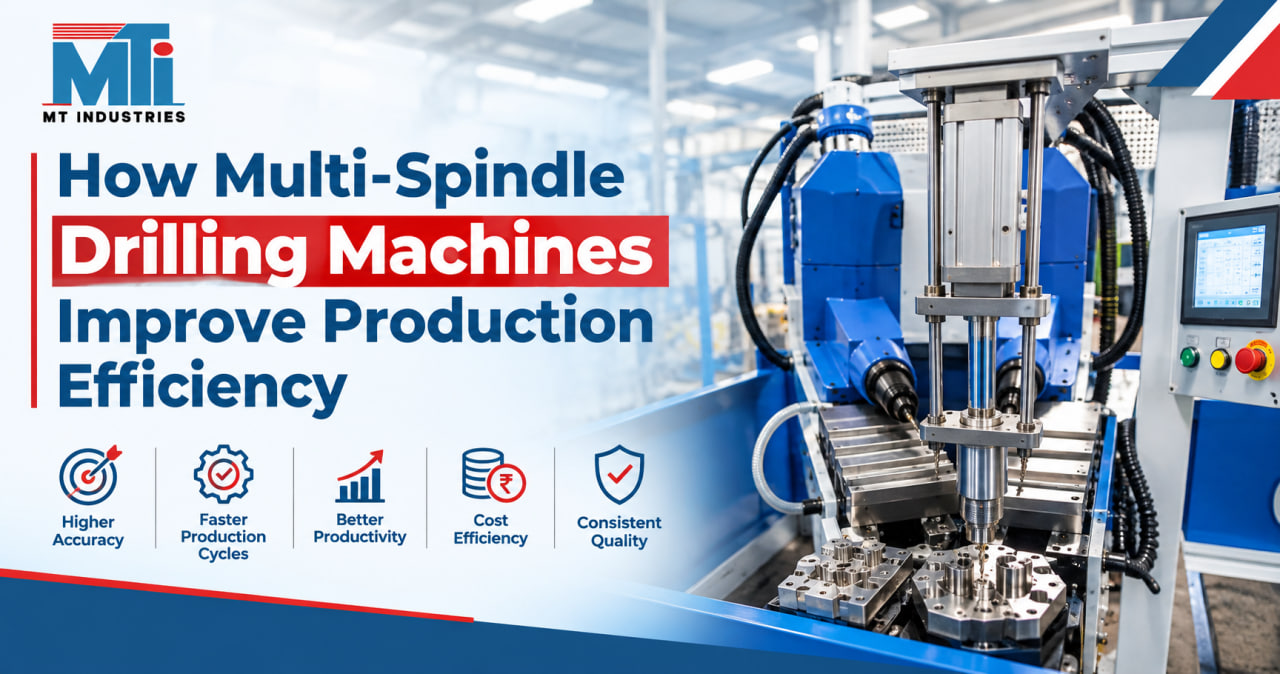
Drilling one hole at a time might get the job done for a small batch, but scale that up and the whole approach turns into a bottleneck fast. Nobody running a serious production line can afford that. This is precisely the problem a Multi Spindle Drilling Machine solves, letting manufacturers punch out several holes at once instead of grinding through them one after another.
Why Single Spindle Setups Fall Short
A single-spindle drill handles exactly one hole per cycle, so production time stretches out in direct proportion to how many holes each component actually needs. Picture a part requiring six or eight holes. That single spindle setup ends up eating far more machine time across an entire run than it should. And it's not just about speed either. Every time the machine repositions for the next hole, there's a fresh chance for something to shift slightly out of place.
What Changes When You Add More Spindles
Drill several holes simultaneously through a fixed spindle arrangement, and per-component production time falls noticeably. Here's what manufacturers typically gain:
Where This Setup Pays Off Most
Think about components with repeating hole patterns, electrical panels, automotive brackets, plumbing fittings, that sort of thing. These are exactly where multi-spindle setups shine. Anywhere a part needs the identical hole pattern stamped across thousands of units, this configuration transforms what used to be a slow, repetitive grind into something far more streamlined. Manufacturers working with junction boxes, mounting plates, and flanges tend to notice some of the sharpest efficiency jumps once they make this switch.
Does Speed Come At the Cost of Precision? Not Really
Here's a question worth asking. Doesn't faster automatically mean sloppier? Not with a properly engineered multi-spindle system, it doesn't. Since every spindle runs off a common drive and sits in precision tooling, hole-to-hole consistency actually gets better compared to a single-spindle machine being manually repositioned again and again. That consistency becomes a genuine asset in assemblies where even minor hole misalignment causes fitting headaches further down the line.
Getting the Configuration Right
Spindle count, spacing, and drive mechanism all have to match the actual component geometry. There's no shortcut around this with a generic layout. A manufacturer willing to actually study the part before locking in spindle design tends to hand over machines that keep performing reliably for years, not ones that need constant tweaking. Skipping this step, or settling for a spindle head that's close enough rather than actually right, is one of the costlier mistakes buyers make.
The Payoff Adds Up Over Time
Small efficiency gains from a multi-spindle system don't stay small. They compound. What looks like a modest improvement on a single cycle turns into real savings once you multiply it across months of continuous production, both in labour hours saved and in rework avoided. Anyone weighing this investment should look past the sticker price and think about what it adds up to across a full production year.
Manufacturers chasing this kind of application-specific engineering often land at MT Industries, known for working closely with clients to build spindle configurations around the exact part being produced instead of handing over something generic off the shelf.
FAQs
How much faster is a multi-spindle drilling machine than a single-spindle one?
Depends on spindle count and hole pattern, but production time typically drops a lot since multiple holes get finished in one cycle rather than several separate ones.
Does drilling several holes at once hurt accuracy?
Not when the system is engineered properly. Consistency usually holds steady or even improves, since every spindle works off a fixed, precisely aligned setup.
What kinds of components see the biggest benefit?
Parts with repeating hole patterns produced in high volumes, like brackets, panels, and fittings tend to gain the most from switching to this setup.
Can the spindle configuration be adjusted for different products?
Yes, spindle count and spacing get designed around the specific component in most cases, rather than sticking to one fixed standard layout.
For manufacturers churning out high volumes of components with repeated hole patterns, a well-configured Multi Spindle Drilling SPM or Multi Drilling SPM Machine setup often ends up being the difference between a line that keeps pace with demand and one that keeps falling behind.